When your facility floor is part of production, safety, and uptime, it can’t be treated like a “nice-to-have finish.” Industrial epoxy flooring is a working floor system—engineered to protect the concrete, reduce maintenance, improve safety, and stand up to forklifts, pallets, impact, chemicals, and aggressive cleaning.
Industrial Applications installs industrial epoxy floor and flooring systems built for manufacturing, warehousing, processing, and other demanding environments—backed by a prep-first approach that helps industrial floors perform long-term.
If you’re planning a floor upgrade, facing a failing floor, or preparing for a shutdown window, call Industrial Applications or fill out the form today to speak with an experienced professional who can recommend the right epoxy flooring system for your facility.
Industrial facility floors take daily punishment—forklift turning, pallet jacks, point loads, dropped tools, wheeled carts, and constant foot traffic. The right epoxy floor system helps protect the slab and reduce the floor deterioration that leads to dusting, spalling, and costly repairs. A properly designed flooring build improves how the floor performs where your operation is hardest on it.
Spills happen. So do washdowns and harsh cleaners. Many facilities need epoxy flooring that resists oils, solvents, acids, caustics, and repeated cleaning—especially in process areas, maintenance bays, and chemical handling zones. Industrial Applications installs chemical-resistant epoxy floor systems designed for those tough conditions, so the flooring doesn’t become the weak link.
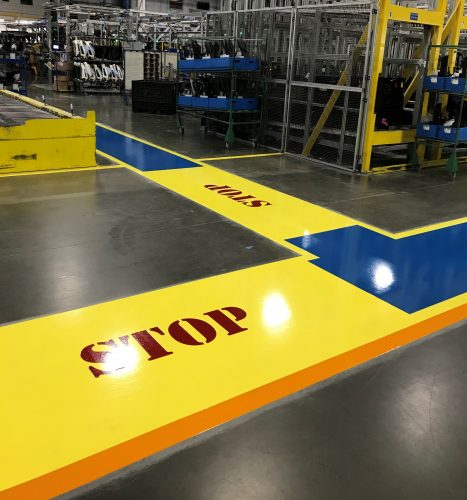
Facility flooring affects safety. Industrial Applications can build slip-resistant floor textures where conditions demand traction, while keeping other floor areas smoother for rolling traffic and cleanability. Industrial Applications can also support floor striping and floor markings that improve traffic flow, reduce confusion, and help separate pedestrians and equipment.
Want clear guidance instead of guesswork? Contact Industrial Applications now to discuss your floor conditions, flooring goals, and downtime window—and get recommendations from a team that works on industrial floors every day.

Not every epoxy floor is the same. The best epoxy flooring system depends on what your floor is exposed to and how the flooring is used. Industrial Applications helps facilities select flooring based on:
For forklift corridors, loading areas, production zones, and high-impact environments, Industrial Applications installs heavier-build epoxy flooring systems that are engineered to improve abrasion resistance and floor life compared to thin coatings. The goal is a floor that performs where your operation stresses it most.
If chemical exposure is part of daily operations, Industrial Applications recommends chemical-resistant epoxy systems that help protect the concrete floor and reduce failures caused by repeated exposure. This type of flooring is often critical in maintenance areas, process zones, and chemical handling locations.
If your facility requires static control, Industrial Applications can install ESD / conductive flooring designed to dissipate static charges safely. This is common in electronics-sensitive operations and other environments where static is a risk to product, process, or equipment.
Containment is not just “apply a coating.” Industrial Applications installs containment-related floor coating systems where planning, substrate conditions, and exposure expectations matter. The right containment floor system can help facilities protect their slab and reduce long-term risk in critical areas.
If you’ve seen an epoxy floor peel, bubble, or delaminate, you already know the truth: the floor coating is only as good as the bond—and bond quality is driven by surface preparation.
Industrial Applications takes floor preparation seriously because prep is where industrial flooring projects succeed or fail. A strong floor system starts with the right surface profile, the right cleaning process, and the right repairs—before the epoxy goes down.
Industrial Applications uses professional prep methods such as shot blasting and diamond grinding based on floor conditions and the flooring system selected. The method depends on slab condition, contamination, prior floor coatings, and the performance requirements of the epoxy flooring build. The outcome that matters is a properly prepared floor surface that supports long-term adhesion.
In industrial facilities, joints and damaged edges often fail before the main floor field does—especially under forklift traffic. Industrial Applications addresses floor joints, cracks, and transitions so the flooring system isn’t installed over known failure points. This helps the epoxy flooring system perform better and last longer in real production conditions.
A great floor project is one that gets installed without derailing production. Industrial Applications plans flooring installs around operations, access needs, and safety requirements.
Many facilities cannot shut down an entire building. Industrial Applications can phase the floor project by zones, aisles, departments, or lines—protecting critical routes and keeping key areas operational while the epoxy flooring is installed.
Industrial Applications plans for dust control, traffic control, and work-area containment so your facility floor project doesn’t create unnecessary disruption. The goal is a safer floor jobsite and a smoother experience for your operations team.
Return-to-service varies by epoxy system and site conditions. Industrial Applications sets realistic expectations so you can plan staffing, production, equipment movement, and access routes around the new floor and flooring installation schedule.
If you have a shutdown window—or a floor that can’t wait—call Industrial Applications now (Phone number link) so an experienced professional can help you plan the right flooring scope and schedule.
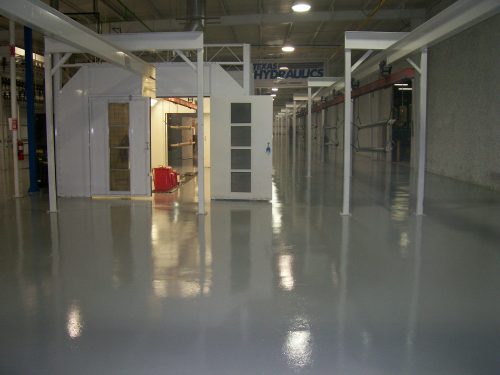
When a floor project involves Facilities, Engineering, EHS, Operations, and Procurement, the questions below determine who makes the shortlist. Industrial Applications is ready for these conversations because industrial flooring is what Industrial Applications does.
Industrial Applications designs epoxy flooring systems based on real floor use: forklift turning wear, rolling traffic, point loads under equipment, and impact exposure. This is how Industrial Applications helps facilities avoid “pretty floors” that fail in the first heavy-use season.
Some floors face thermal swings from hot processes, cold areas, or washdowns. Industrial Applications accounts for thermal stress and environment conditions when recommending epoxy flooring systems, especially in zones where floor movement and temperature change can be significant.
Procurement teams often ask exactly what is being installed on the floor—and why. Industrial Applications discusses epoxy material types, performance expectations, and site constraints so your team can evaluate flooring options confidently and avoid surprises during installation.
Floors influence incident rates, housekeeping quality, and operational efficiency. Industrial Applications treats safety planning as part of the flooring project—not an afterthought.
Slip resistance is not one-size-fits-all. Industrial Applications tailors floor texture by area—wet zones, oily zones, and high-foot-traffic spaces—while protecting the floor’s cleanability and usability for rolling traffic. The result is flooring that supports safer movement without creating unnecessary maintenance headaches.
Industrial Applications can incorporate floor striping and markings to improve facility flow, clarify paths, and reduce traffic confusion—especially in high-activity floor areas like docks, staging zones, and active production corridors.
Industrial flooring decisions are rarely about the lowest bid—they’re about total cost of ownership. Industrial Applications helps facilities think in lifecycle terms: fewer failures, less disruption, and a floor that stays serviceable.
Industrial Applications can provide guidance on floor cleaning expectations so your team understands how to maintain the epoxy flooring system without damaging the floor surface prematurely.
Industrial floors don’t always require full replacement to stay effective. Industrial Applications can support spot repairs in heavy-wear floor zones, targeted re-topcoats during planned downtime, and ongoing floor joint maintenance strategies.
A floor that reduces emergency repairs and unplanned downtime often outperforms a floor that was simply “cheaper up front.” Industrial Applications helps decision-makers connect flooring choices to operational disruption, maintenance demands, and long-term floor performance.
Facilities and procurement teams typically buy industrial epoxy flooring in four ways—and Industrial Applications supports each path.
When a floor fails, risk escalates quickly. Industrial Applications can evaluate floor conditions, define a clear scope, and help facilities move fast with a practical flooring plan.
Shutdown windows demand schedule discipline and scope clarity. Industrial Applications plans epoxy flooring work so the floor installation stays aligned with your downtime window.
For expansions and upgrades, Industrial Applications supports documentation, submittals, and communication that help stakeholders stay aligned throughout the floor project.
If you manage multiple facilities, consistency matters. Industrial Applications can help standardize flooring approaches across sites, using repeatable prep standards and system selection logic for floors that perform similarly from building to building.
If you want accurate pricing and fewer change orders, your RFQ/RFP needs to define the floor project clearly. Industrial Applications often sees bid confusion caused by missing floor details—so here’s a checklist that helps.
Include what you know about the floor:
Spell out expectations for:
Don’t forget:
Request:
You don’t need a contractor who can “apply epoxy.” You need a partner who understands industrial operations and installs flooring systems around prep, performance, and uptime. Industrial Applications is built for industrial flooring work and industrial floor environments.
Industrial Applications prioritizes surface preparation because it determines adhesion and long-term floor performance. This includes professional prep methods, detailed cleaning, and attention to joints and repairs before epoxy is installed.
Industrial Applications supports specialized requirements—chemical-resistant epoxy flooring, ESD / conductive flooring, and containment-related systems—so you can match the floor solution to the way your facility actually runs.
Industrial Applications helps stakeholders align on scope, sequencing, downtime planning, and return-to-service expectations—because a floor project should reduce operational stress, not add to it.

If you’re planning a shutdown, dealing with a failing floor, or trying to standardize epoxy flooring across a facility, the fastest way forward is a professional evaluation and a clear system recommendation.
You’ll get practical guidance on:
Call Industrial Applications today 901-794-4334 or fill out the form now to speak with an experienced professional about your floor conditions, your flooring requirements, and the best epoxy flooring system for your facility.
Contact Us For a Free In-Depth Flooring Evaluation