If your facility floor takes daily abuse—from forklifts, pallets, impact, chemicals, washdowns, or constant foot traffic—industrial epoxy flooring can be one of the smartest upgrades you make. This isn’t about “making the floor look nicer.” It’s about installing a flooring system that protects the concrete floor, supports safety, improves cleanability, and reduces long-term floor maintenance surprises.
Want a straight answer on whether epoxy flooring is right for your facility floor? Call Industrial Applications or fill out the form to speak with an experienced professional about your flooring needs, floor conditions, and downtime window.

A facility is typically a strong candidate for epoxy flooring when one or more of these are true:
Industrial epoxy flooring works best when it’s treated as an engineered floor system—not a quick coating. That’s why Industrial Applications focuses heavily on surface preparation and floor repairs before epoxy installation. Learn more about Industrial Applications’ prep process here.
Manufacturing floors deal with continuous traffic, equipment movement, pallets, and impact. Bare concrete floors can dust, wear, and break down under this level of daily use—especially in forklift turning zones and production pathways. Epoxy flooring can help by creating a tougher floor surface, reducing concrete dusting, improving cleanability, and supporting safer movement with the right traction strategy.
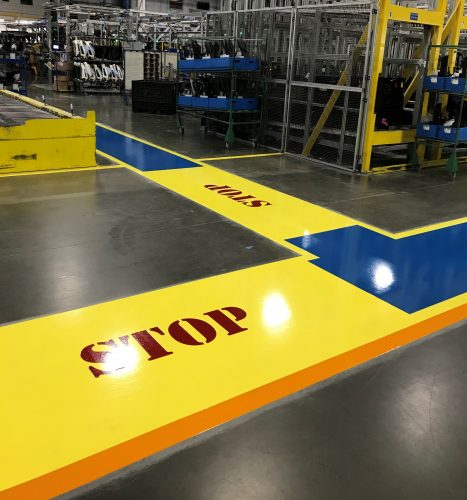
Warehouse floors are often the most punishing environment for any flooring system—constant forklift activity, pallet dragging, turning wear, dock traffic, and staging congestion.
If your facility floor includes repeated wear lanes, chipping, or dusting, an epoxy flooring system may be one of the fastest ways to stabilize flooring performance.
Maintenance areas are where floors get hit with oil, lubricants, solvents, and messy work. Unprotected floors stain, degrade, and become difficult to maintain—and the flooring can quickly become a safety risk. Chemical-resistant epoxy flooring is often a strong fit in these areas. Learn more about chemical-resistant epoxy flooring from Industrial Applications.
Need a recommendation for one specific zone? Many facilities don’t need the same flooring system everywhere. Industrial Applications can recommend the right epoxy flooring build by zone based on traffic, exposure, and cleaning requirements. Request a Free In-Depth Floor Evaluation here.
Facilities that must be cleaned frequently need a flooring system that supports housekeeping, washdowns, and predictable sanitation routines. Floors that absorb spills, trap debris, or break down under washdown cycles become costly. Epoxy flooring can support these environments with seamless floor surfaces, zone-specific traction, and long-term performance—especially when the slab is properly prepared and repaired first.
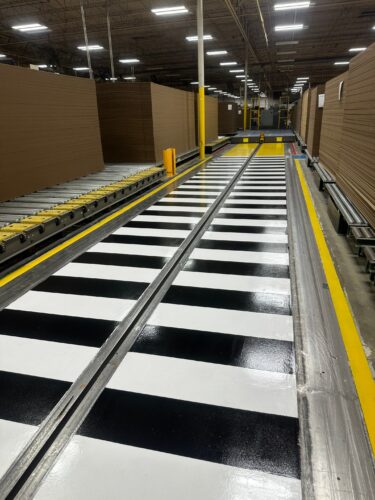
Some facility floors experience thermal swings—cold zones, hot process areas, frequent door openings, or washdown cycles. Temperature movement can stress a floor system, especially at joints and transitions. Industrial Applications can evaluate how temperature, traffic, and slab condition interact—then recommend an epoxy flooring approach that’s realistic for the space.
If your operations include chemicals, aggressive cleaners, acids, caustics, solvents, or oils, the floor is at higher risk. A weak floor coating can fail quickly when exposure is constant. A properly selected chemical-resistant epoxy flooring system can help protect the concrete floor and reduce long-term patching and rework—especially in critical production zones.
Some facilities must control static discharge to protect products, equipment, or processes. These spaces may require specialized epoxy flooring designed for static dissipation. Industrial Applications installs ESD / conductive flooring systems for static-control environments.
If your facility has busy corridors, cross-traffic, and frequent pedestrian movement, the flooring system impacts safety and efficiency every day.
Some facilities don’t start with “we want epoxy.” They start with:
That’s often a sign the floor needs more than a surface layer—it needs better preparation, repairs, and a true epoxy flooring system built for the way the floor is used. Industrial Applications provides joint repair and rebuild services to address common industrial failure points:
The most common reason industrial epoxy flooring fails early is simple: insufficient surface preparation and ignored floor repairs—especially joints and damaged edges. When the floor isn’t properly prepared, the epoxy can’t bond consistently, which can lead to peeling, bubbling, and delamination in heavy-use floor zones. Industrial Applications approaches epoxy flooring with a prep-first mindset because industrial floors fail at the bond line first.

If you answer “yes” to any of these, it’s time for a professional floor evaluation:
For a clear recommendation, call Industrial Applications or fill out the form to speak with an experienced epoxy flooring professional. Industrial Applications will help you assess the floor, define the right flooring scope, and select an epoxy system that matches your facility’s traffic, exposure, and schedule.
Talk to an Epoxy Flooring Expert Now.
Request a Free In-Depth Floor Evaluation here.