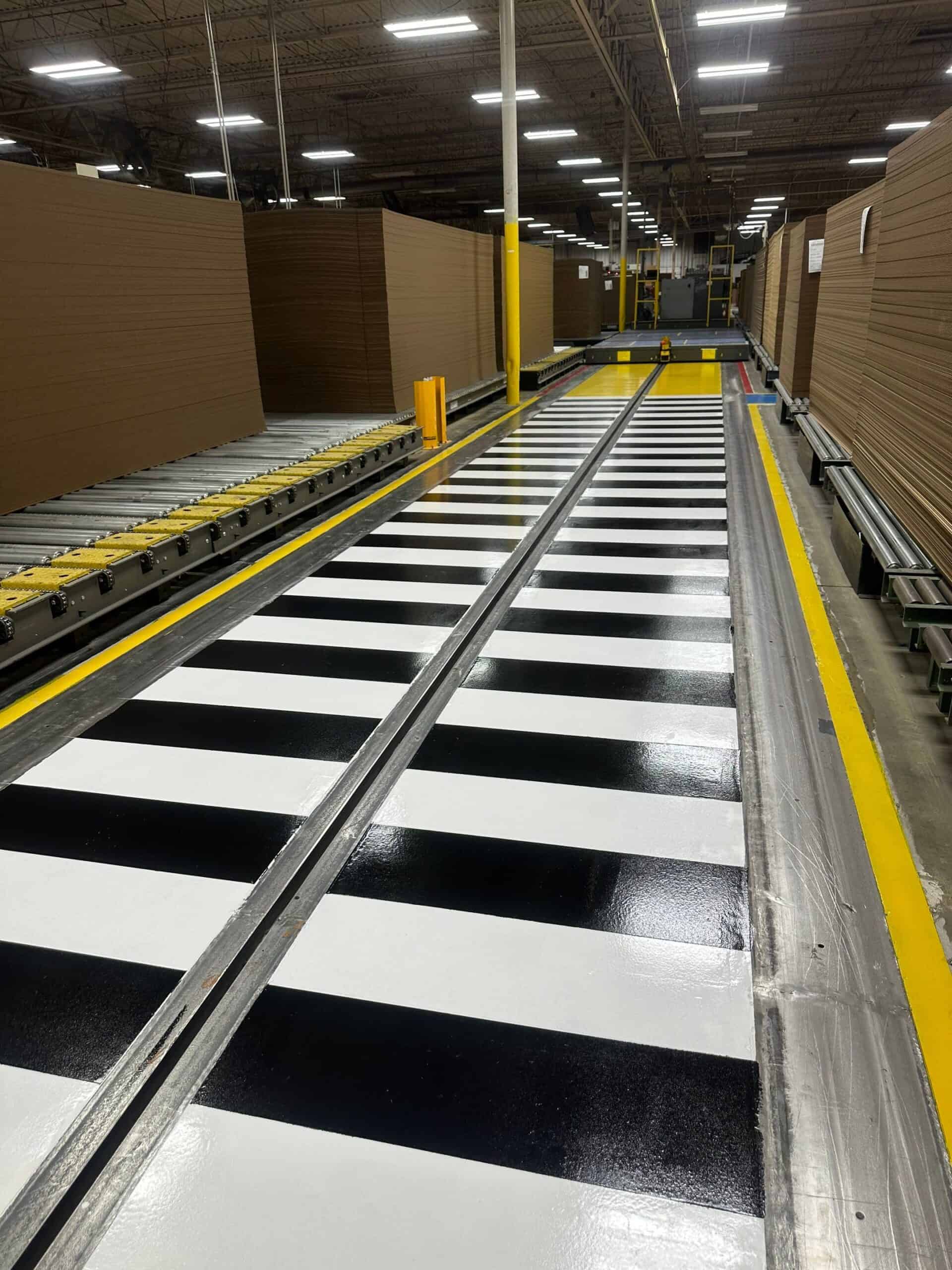
When concrete floors begin to deteriorate inside an Arkansas industrial facility, the consequences can extend far beyond appearance. Cracks, worn surfaces, dusting, chemical absorption, and damaged joints can interfere with production, increase cleaning demands, create safety concerns, and contribute to premature equipment wear. In a manufacturing plant, distribution center, warehouse, food processing operation, or other commercial facility, the floor is a working part of the building’s infrastructure.
Industrial Applications provides industrial concrete coating installation for facilities throughout Arkansas. We work with facility managers, plant engineers, maintenance teams, and business owners to identify flooring systems that match the actual demands of their operations. Our capabilities include industrial floor coatings, industrial concrete coatings, epoxy flooring, polished concrete, concrete grinding, concrete polishing, joint and crack repair, heavy-duty resurfacing, chemical-resistant systems, safety striping, secondary containment, and other commercial concrete flooring services.
Choosing an installer involves more than finding someone who can roll material onto a floor. Arkansas facilities need a contractor that can assess the condition of the slab, identify contamination or moisture concerns, prepare the concrete correctly, and recommend a system that can withstand the traffic, chemicals, cleaning procedures, and temperatures present in the space.
For companies searching for industrial floor coating contractors near me, industrial floor painting contractors, or industrial concrete coatings installers in Arkansas, experience with real industrial environments should be a priority. The right contractor should also be able to work around operating schedules, planned shutdowns, and return-to-service requirements.
Industrial Applications does not approach industrial floors as simple paint projects. We develop concrete flooring solutions intended to protect the slab, support the operation, and provide lasting value for Arkansas businesses.
📞 Call Industrial Applications Today to
Schedule a Floor Evaluation
and speak with an experienced professional
about the best industrial concrete floor coatings for your Arkansas facility.
Contact Us For a Free In-Depth Flooring Evaluation
The purpose of an industrial concrete coating is not simply to make a floor look cleaner. It must protect the concrete and help the facility function more effectively. Industrial floors may be exposed to forklifts, pallet jacks, production machinery, rolling carts, heavy loads, oils, chemicals, washdowns, temperature changes, and continuous foot traffic.
Without the right protection, the surface can gradually wear away, creating dust, uneven areas, damaged joints, and maintenance concerns. These problems can become more expensive and disruptive when they are allowed to continue.
Industrial floor coatings create a durable barrier between the concrete and the conditions inside the facility. Depending on the environment, an Arkansas operation may need a high-build epoxy system, urethane concrete coating, thin-mil commercial coating, chemical-resistant flooring, antimicrobial epoxy, ESD flooring, non-slip texture, or secondary containment system.
The correct solution depends on how the space is used. A dry warehouse may need abrasion resistance and clearly marked traffic lanes. A chemical handling area may require a coating that can tolerate repeated spills and cleaning agents. Food and beverage facilities often need seamless, cleanable surfaces, while manufacturing spaces may need impact resistance, joint restoration, and protection against oils or process chemicals.
Before recommending a flooring system, Industrial Applications considers the condition of the concrete, expected traffic, chemical exposure, moisture, temperature, sanitation procedures, safety requirements, shutdown availability, and long-term maintenance goals.
Planning an upcoming shutdown in Arkansas? Speak with an industrial flooring professional at 901-794-4334 before finalizing your schedule.

Even a high-performance coating can fail when the concrete beneath it is not properly evaluated and prepared. Peeling, bubbling, delamination, excessive wear, and poor adhesion are often symptoms of problems that began during preparation or product selection.
Industrial concrete coatings require more than a clean-looking surface. The installer must determine whether the slab is structurally sound, whether old coatings or contaminants need to be removed, and whether cracks, joints, spalls, or moisture conditions need to be addressed before installation begins.
Industrial Applications uses a preparation-first process for Arkansas industrial flooring projects. The objective is to create a strong, stable bond between the existing concrete and the new flooring system. That may involve mechanical grinding, shot blasting, coating removal, joint rebuilding, crack repair, or surface restoration.
A knowledgeable industrial concrete coatings installer should be familiar with:
Industrial Applications applies this technical experience throughout the project, from the initial floor evaluation to the final installation. Our team helps Arkansas facility leaders select flooring systems that are appropriate for the work, traffic, maintenance routines, and environmental conditions in each area.
Call (901) 794-4334 to request a free expert estimate for your Arkansas industrial flooring project.
The phrase industrial floor paint is often used to describe almost any colored product applied to concrete. However, there is a meaningful difference between conventional floor paint and a professionally installed industrial coating system.
Basic paint may provide a temporary improvement in appearance, but it generally does not provide the thickness, bond strength, impact resistance, chemical protection, or abrasion resistance required in a demanding facility. Under forklift traffic, pallet jacks, heavy equipment, aggressive cleaning, oils, and moisture, ordinary paint may begin to wear or peel quickly.
Industrial floor coatings are engineered to handle more challenging conditions. Epoxy, urethane, and other resinous systems form a stronger protective layer over the concrete. These coatings can be customized by thickness, surface texture, finish, color, and performance characteristics.
Some Arkansas facilities may need coatings that resist chemicals and oils. Others may require improved traction, moisture tolerance, static control, impact resistance, or a surface that is easier to sanitize. Secondary containment areas may need specialized systems capable of protecting the concrete from repeated exposure to harsh materials.
When comparing industrial floor painting contractors in Arkansas, ask exactly what type of system is included. A low-cost proposal may cover only basic paint application, while a complete industrial flooring scope may include concrete repairs, grinding, mechanical preparation, a high-build epoxy layer, aggregate, topcoats, safety striping, and scheduled installation phases.
Industrial Applications helps facility teams understand these differences before work begins. Our recommendations are based on how the floor will be used, not simply on color or initial price.
Proper surface preparation is one of the most important parts of an industrial concrete coating project. Before epoxy, urethane, or another coating can be installed, the concrete must be inspected and prepared to receive the new system.
Depending on the condition of the floor, preparation may include concrete grinding, shot blasting, removal of existing coatings, degreasing, contamination removal, crack filling, joint rebuilding, spall repair, moisture assessment, and creation of the required concrete surface profile.
Mechanical preparation removes weak surface material and exposes sound concrete. It also creates the texture needed for the coating to achieve a strong mechanical bond. Applying a new system over a smooth, dusty, oily, contaminated, or deteriorated surface can lead to adhesion problems and premature failure.
Industrial Applications provides concrete surface preparation services because the finished system can only perform as well as the substrate beneath it. A high-quality epoxy coating still needs properly prepared concrete. Polished concrete requires the correct sequence of grinding, densification, and polishing. Heavy-duty resurfacing systems require stable repairs and an appropriate surface profile.
Joints and transitions also deserve close attention in Arkansas industrial facilities. Forklifts and other wheeled traffic can repeatedly strike joint edges, causing them to break down over time. Installing a coating without correcting these weak areas may allow the damage to continue beneath or through the new surface.
Industrial Applications evaluates cracks, joints, spalls, edges, transitions, and worn areas before installation. Addressing these conditions early helps create a more reliable industrial floor and protects the facility’s investment over the long term.

Epoxy remains one of the most common choices for industrial concrete floor coatings because it offers durability, adhesion, chemical resistance, abrasion resistance, and a seamless appearance. Epoxy flooring can be customized for many industrial and commercial settings, including manufacturing, distribution, logistics, aviation, food and beverage, healthcare-related manufacturing, maintenance areas, and production spaces.
An epoxy coating system can help protect concrete from wear, dusting, staining, moisture, chemicals, and surface damage. It can also improve lighting with a brighter finish, support easier cleaning, and create clear work zones through color, striping, and demarcation.
Industrial Applications installs epoxy floor coatings based on the floor environment. Some areas need a heavy-duty epoxy build to handle forklift traffic and impact. Some areas need chemical-resistant epoxy coatings for acids, oils, solvents, caustics, or cleaning agents. Some facilities need antimicrobial epoxy floor coatings to support hygienic operations. Others need ESD epoxy floor coatings to manage static-sensitive environments.
Epoxy is a powerful flooring option, but it is not one-size-fits-all. Thickness, surface texture, aggregate broadcast, topcoat selection, cure time, and return-to-service requirements all matter. Industrial Applications helps you select an epoxy floor system that matches your concrete, your workflow, and your facility requirements.
Not every concrete floor needs a coating. In some facilities, polished concrete may be the better long-term flooring solution. Concrete polishing mechanically refines the concrete surface through grinding and polishing steps to create a dense, durable, attractive, and lower-maintenance floor. Polished concrete can be a strong option for warehouses, commercial spaces, industrial areas, corridors, offices within facilities, and other environments where the concrete can be refined instead of coated.
Concrete polishing can reduce dusting, improve reflectivity, and create a clean professional appearance. Polished concrete also uses the existing concrete slab, which can make it an efficient and sustainable flooring option when the slab is a good candidate.
Industrial Applications evaluates whether concrete polishing, polished concrete, epoxy coatings, or another industrial flooring solution is the right choice. Sometimes polishing is the best fit. Sometimes industrial concrete coatings are better because the surface needs chemical protection, moisture protection, slip resistance, or a seamless coating system. In other cases, a facility may use both: polished concrete in lower-risk areas and epoxy or urethane coatings in high-abuse zones.
The right industrial concrete coatings installer should understand concrete polishing, not just coatings. That broader technical knowledge helps you avoid installing a coating where polished concrete would perform well, or choosing polishing where a protective coating is necessary.
A concrete floor affects how people and equipment move through your facility. Industrial floor coatings can support safer operations by improving visibility, defining work zones, adding slip-resistant texture, and helping create cleaner surfaces for maintenance teams.
Industrial Applications can incorporate non-slip industrial floor coatings where wet conditions, oils, powders, or frequent cleanings create traction concerns. We can also support floor striping, aisle markings, pedestrian paths, hazard zones, equipment areas, and safety demarcation. These details help improve traffic flow and reduce confusion in active industrial facilities.
Cleanability is also a major factor. A damaged concrete surface can trap dirt, dust, oils, chemicals, and contaminants. Seamless epoxy coatings and other industrial concrete coatings can help reduce harborage points and make routine cleaning more effective. In facilities with washdowns, food production, pharmaceutical-adjacent processes, or strict housekeeping standards, the right floor coating can support sanitation and maintenance goals.
A floor should not fight your operations team. Industrial Applications designs industrial concrete floor coatings around the way the facility is used every day.
Request a Free, In-Depth Floor Evaluation & Scope SpecificationWhen a plant manager, facilities director, EHS manager, maintenance leader, or procurement team searches for industrial floor coating contractors near me, they are usually looking for speed, trust, and certainty. You want a contractor who can evaluate the concrete, explain the options, respect the schedule, and install a floor system that holds up.
Before hiring industrial concrete coatings installers, ask:
Do they understand industrial concrete, not just decorative flooring?
Do they provide concrete grinding, surface preparation, and repair?
Can they explain the difference between industrial floor paint, epoxy coatings, polished concrete, and urethane concrete?
Do they ask about traffic, chemicals, cleaning, temperature, safety, and downtime?
Can they work around shutdowns, phased schedules, or active operations?
Do they offer floor coating services for industrial and commercial facilities?
Do they understand joints, cracks, spalls, and concrete surface failures?
Can they recommend the right coating system instead of pushing one product for every floor?
Industrial Applications was built for these conversations. We work with industrial and commercial customers that need practical guidance, not guesswork. Our team evaluates the floor, listens to the concerns, and recommends a system based on performance, schedule, safety, and budget.
If you are comparing industrial floor painting contractors or searching for industrial concrete coatings installers, call Industrial Applications first. We can help you understand what your floor needs before you commit to a scope.
Industrial concrete floor coatings can be used in many facility types and floor environments, including manufacturing plants, warehouses, distribution centers, food and beverage processing areas, production spaces, aviation and aerospace facilities, automotive and equipment service areas, healthcare and medical manufacturing environments, chemical handling areas, secondary containment areas, maintenance rooms, loading docks, forklift aisles, commercial buildings with high-traffic concrete floors, safety corridors, and marked pedestrian routes.
Each area places different demands on the concrete. Some floors need epoxy. Some floors need polished concrete. Some floors need grinding, repairs, and a high-build coating. Some floors need chemical-resistant coatings, urethane concrete, or safety texture. Industrial Applications helps determine the best solution for the space instead of treating every floor the same.
Got a Failing Floor or an Immediate Risk? Call (901) 794-4334 for a Rapid Assessment.
Working with Industrial Applications starts with understanding the floor and the facility. We want to know what is happening now, what is failing, what the concrete is exposed to, how soon the floor needs to return to service, and what long-term performance looks like for your team.
A typical process may include:
The goal is simple: a concrete floor system that looks professional, performs under pressure, and supports the work your facility does every day.

Your industrial concrete floor should support production, safety, maintenance, and long-term value. If the concrete is worn, dusty, slippery, cracked, stained, chemically damaged, or difficult to clean, it may be time to talk with an experienced industrial concrete coatings installer.
Industrial Applications installs industrial floor coatings, industrial concrete coatings, epoxy flooring, polished concrete, concrete polishing, concrete grinding, joint repair, surface preparation, and specialty floor coating services for industrial and commercial facilities.
Call Industrial Applications today or fill out the contact form to request a free floor evaluation. Whether you searched for industrial floor coating contractors near me, industrial floor painting contractors, or industrial concrete coatings installers, our team can help you find the right flooring system for your facility.
An industrial concrete coatings installer evaluates concrete floors, prepares the surface, repairs damaged areas, and installs industrial concrete coatings, epoxy coatings, urethane coatings, polished concrete, or other floor systems designed for commercial and industrial use. The installer should understand concrete grinding, surface preparation, floor coating selection, safety requirements, traffic, chemicals, and return-to-service planning.
In most demanding facilities, yes. Industrial floor paint may improve appearance, but industrial floor coatings are designed for stronger performance while also improving appearance. Epoxy coatings and other industrial concrete floor coatings can provide better abrasion resistance, chemical resistance, impact resistance, cleanability, and long-term protection for concrete floors.
The lifespan depends on the concrete condition, surface preparation, coating type, traffic, chemicals, cleaning methods, and maintenance. A properly prepared and professionally installed epoxy floor or industrial concrete coating system can provide many years of service, especially when the system is matched to the facility’s real demands.
In many cases, yes. Concrete grinding, shot blasting, or other surface preparation methods are often required to create the proper surface profile for epoxy and industrial floor coatings. Without proper surface preparation, the coating may not bond correctly and can fail early.
Yes. Industrial Applications can plan floor coating services around shutdowns, phased schedules, or defined work windows. Planning ahead helps manage cure time, equipment movement, access, safety coordination, and return-to-service expectations.
The best coating depends on the facility. Epoxy coatings may be ideal for many industrial floors, while urethane concrete, chemical-resistant coatings, antimicrobial coatings, ESD flooring, non-slip safety coatings, or polished concrete may be better in specific areas. Industrial Applications evaluates the concrete, traffic, chemicals, cleaning, safety, and downtime before recommending a system.
Polished concrete is a strong option when the slab is a good candidate and the floor does not need a protective coating for chemical exposure, moisture, containment, or heavy contamination. Industrial concrete coatings are usually better when the floor needs a seamless protective layer, chemical resistance, safety texture, or specialty performance. Industrial Applications can help compare polishing and coating options for your facility.
Ask about concrete surface preparation, grinding, prior coating removal, joint repair, epoxy system selection, chemical resistance, slip resistance, installation schedule, cure time, safety process, and experience with industrial and commercial facilities. A trusted contractor should explain why a specific floor coating system is right for your concrete and your operation.
Yes. Industrial Applications installs industrial floor coatings, industrial concrete coatings, epoxy flooring, polished concrete, concrete polishing, grinding, surface preparation, joint repair, safety coatings, and related flooring services for industrial and commercial customers.
Call Industrial Applications today 901-794-4334 or fill out the contact form to schedule a free floor evaluation. An experienced professional can review your concrete, discuss your goals, and recommend the right industrial concrete floor coatings, epoxy flooring, or polished concrete solution for your facility.
Contact Us For a Free In-Depth Flooring Evaluation